

Choosing the right partner to bring your manuscript to life is an important moment in any author’s journey. Did you know that the global book publishing market is expected to reach around $97.71 billion in 2026? Even with the rise of digital media, physical books continue to dominate, with printed books generating the majority of industry revenue.
A “one size fits all” approach does not work in publishing. A delicate poetry chapbook needs a different treatment compared to a 500-page historical epic. To make sure your masterpiece looks as impressive as it reads, it is essential to match your book format with the appropriate book printing services.
Understanding the Impact of Book Formats
Before you search for book printing, you must define your book’s physical identity. The “format” encompasses the trim size, binding style, and paper weight. These choices aren’t just aesthetic; they dictate your printing costs and how readers perceive your brand.
Common Formats and Their Requirements:
- Fiction (Novels/Novellas): Typically 5” x 8” or 6” x 9”. Usually require “Perfect Binding” (standard paperback).
- Non-Fiction/Textbooks: Often larger (7” x 10”) to accommodate charts and sidebars.
- Children’s Books: Require high-durability paper and often “Saddle Stitch” or “Case Binding” (hardcover) to withstand frequent handling.
- Coffee Table/Art Books: Demand premium custom book printing with high-gloss coated paper to make images pop.
Choosing the Right Printing Method: Digital vs. Offset
When evaluating book printing services, the first fork in the road is the technology used.
Digital Printing
Digital printing is perfect for “Print on Demand” (POD). It functions similarly to a high-end office printer but on a massive, industrial scale.
- Best for: Short runs (1–500 copies) and authors who don’t want to manage inventory.
- Why choose it: Lower entry cost and faster turnaround times.
Offset Printing
Offset printing involves creating metal plates that transfer ink onto paper. It is the gold standard for quality.
- Best for: Large runs (over 500–1,000 copies).
- Why choose it: Unit cost drops significantly as the volume increases. If you are looking for book printing Australia for a national retail launch, offset is often the most economical choice for bulk orders.
Selecting Binding Styles Based on Genre
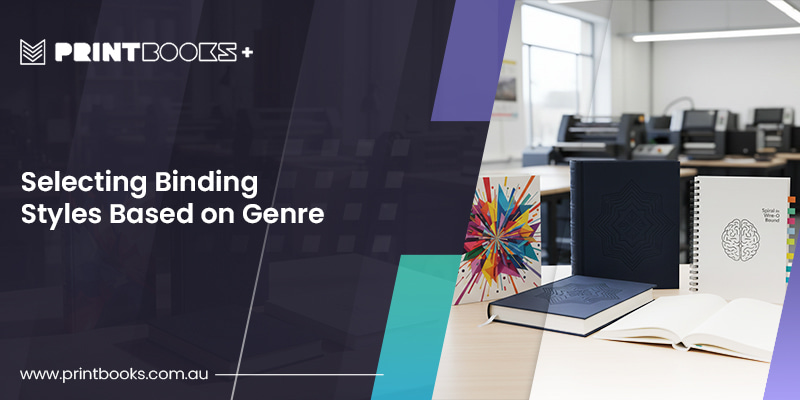
The binding is the “skeleton” of your book. Selecting the wrong one can make your book feel flimsy or make it difficult to read.
Perfect Bound (Paperback)
This is the most common style where pages are glued to a wrap-around cover. Most book printing services offer this as their default. It’s cost-effective and looks professional on bookstore shelves.
Case Bound (Hardcover)
For a premium feel or a “special edition,” case binding is the way to go. It involves a rigid cover often wrapped in cloth, leather, or printed paper. This is a staple of custom book printing for memoirs and collectors’ items.
Spiral and Wire-O Binding
Does your book need to lie flat? If you’re printing a cookbook, manual, or workbook, look for book printing services that offer spiral or wire-o binding. This allows the reader to keep their hands free while using the book.
The Importance of Paper Weight and Texture
The “feel” of the page is a subtle but powerful part of the reader’s experience. Paper is measured in GSM (Grams per Square Meter) or pounds (lb).
- 50lb – 60lb (75-90 GSM): Standard for most novels. Thin enough to keep the book lightweight but opaque enough to prevent “see-through” text.
- 70lb – 80lb (100-120 GSM): Great for non-fiction with some illustrations or diagrams.
- 100lb+ (150+ GSM): Reserved for photo-heavy custom book printing. It feels luxurious and heavy.
Pro Tip: If you are using book printing Australia services, ask for a “sample pack.” Most local printers will send you a folder of paper swatches so you can feel the difference between matte, gloss, and cream stocks.
Finding Local Expertise: Why “Book Printing Australia” Matters
While global POD platforms are convenient, there are distinct advantages to choosing local book printing services within Australia:
-
Shipping Costs:
Books are heavy. Printing overseas often leads to exorbitant shipping fees that eat into your royalties.
-
Quality Control:
Working with a local shop allows you to request a physical proof more quickly.
-
Sustainability:
Reducing the carbon footprint of your book’s transit is a major selling point for modern, eco-conscious readers.
Many book printers in Australia provides specialized “Short Run” digital printing, allowing indie authors to print 50 high-quality copies for a local launch without the stress of international logistics.
Budgeting and Hidden Costs
When comparing quotes for custom book printing, look beyond the “price per book.” Make sure your quote includes:
-
File Setup Fees:
Some printers charge to “pre-flight” your PDF.
-
Promoting:
Will you get a digital PDF proof or a physical “bound galley”? (Always opt for physical if possible!)
-
Cover Finishes:
Features like “Spot UV” (making certain parts of the cover shiny) or “Foil Stamping” are add-ons that can elevate your book but add to the cost.
Conclusion
Selecting the right book printing services is the final bridge between your digital manuscript and a physical object a reader can hold. By matching your format to the right technology and paper stock, you ensure your work is presented in its best possible light.
Don’t be afraid to ask for samples, and remember that custom book printing is a collaborative process. Whether you are utilizing book printing Australia for a local audience or a global POD service for wider reach, your focus should always be on quality and durability.