
When you’re creating a book, it’s not just about what’s written inside. The way it’s printed and bound plays a huge role in how it’s received.
Think about it—some books feel solid, premium, and worth keeping. Others? Not so much.
That difference usually comes down to custom book printing and binding.
Whether you’re an author, a business, or even putting together training material, the right mix of book printing and book binding can completely change the final result. It can turn something average into something people actually value.
And in a market where presentation matters more than ever, just printing pages isn’t enough anymore. The finish, the durability, even how the book opens—all of it affects how people experience it.
So if you’re trying to figure out the best options for book printing and binding, this guide will help you make smarter decisions without overcomplicating things.
What Goes Into Book Printing and Binding (And Why It Matters)
Before getting into options, it helps to understand what’s really happening behind the scenes.
Book printing is exactly what it sounds like—transferring your content onto paper using different methods.
Book binding, on the other hand, is how those pages are put together and held in place.
Simple in theory. But the choices you make here affect everything.
A well-thought-out combination can:
- Make your book last longer
- Improve how it looks and feels
- Make reading easier
- Strengthen your brand or message
And whether you’re printing novels, catalogs, or workbooks, choosing the right book printing services can make all the difference.
Choosing the Right Book Printing Method
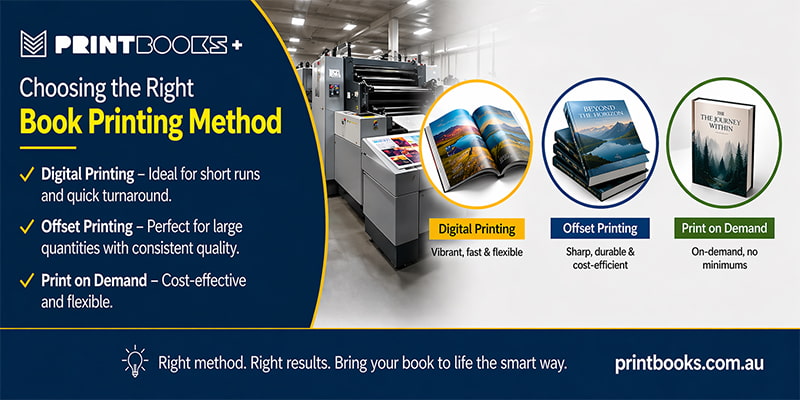
This is where most projects really begin—deciding how your book will be printed.
The method you choose impacts cost, quality, and how quickly you get the final product.
Digital Printing
Digital printing is probably the most flexible option out there right now.
It works especially well for smaller quantities and quick turnarounds. If you’re testing a new book idea or don’t want to commit to a large print run, this is usually the safest choice.
Where it works best:
- Self-publishing
- Small business materials
- Print-on-demand setups
Why people choose it:
- Lower upfront cost
- Faster production
- Easy to make updates
That said, it’s not perfect. If you’re printing in bulk, the cost per unit can add up.
Still, for many projects, digital is the go-to for custom book printing.
Offset Printing
Offset printing is more traditional—but there’s a reason it’s still widely used.
If you’re printing large volumes, this method gives you better consistency and overall quality. Colors are sharper, and the finish feels more refined.
Best suited for:
- Large print runs
- Publishing houses
- Corporate books and catalogs
Why it stands out:
- High-quality output
- Lower cost per unit at scale
- More options for paper and finishes
The trade-off? Higher setup cost and longer production time.
But if you’re going big, offset printing is one of the most reliable book printing services you can choose.
Print-on-Demand (POD)
Print-on-demand is exactly what it sounds like—you print only when someone orders.
This model is popular with independent creators who don’t want to deal with inventory.
Good for:
- Online sellers
- First-time authors
- Testing new ideas
What makes it appealing:
- No need to store stock
- Lower risk
- Flexible scaling
Of course, you’ll have fewer customization options. But for many, the convenience outweighs that.
Book Binding Options That Actually Make Sense
Once your book is printed, the next step is binding—and this is where things get more physical.
People notice how a book opens. How it feels. Whether it holds up over time.
Perfect Binding
You’ve definitely seen this before—it’s used in most paperback books.
It gives you a clean spine, a professional look, and works for a wide range of projects.
Common uses:
- Books
- Magazines
- Catalogs
It’s popular because it balances cost and quality. For many, it’s the default choice in book printing and binding.
Saddle Stitch Binding
This is the simplest form—pages folded and stapled together.
It works well for smaller booklets, but not much beyond that.
Best for:
- Brochures
- Event programs
- Thin booklets
It’s affordable and quick. Just don’t expect it to handle a high page count.
Spiral and Wire-O Binding
Not the most stylish option—but very practical.
If your book needs to stay open flat, this is one of the best choices.
Ideal for:
- Workbooks
- Manuals
- Notebooks
It’s durable and easy to use, which makes it a strong option for functional materials.
Case Binding (Hardcover)
This is where things start to feel premium.
Hardcover books are built to last. They’re sturdy, polished, and often used when presentation really matters.
Common for:
- Novels
- Coffee table books
- Corporate presentations
If you want something that stands out, this is one of the top-tier book binding options.
Lay-Flat Binding
This one is more specialized.
Lay-flat binding allows pages to open completely flat, which is perfect for visual content.
Best suited for:
- Photo books
- Portfolios
- Design-heavy projects
It’s not for every project—but when used right, it makes a big impact.
Why Paper Choice Isn’t Something to Ignore
Here’s something people often underestimate—paper.
It might seem like a small detail, but it changes how your book feels immediately.
Thicker paper feels more durable. Lighter paper? Not always ideal, especially for double-sided printing.
You’ll usually choose between:
- Matte (clean and easy to read)
- Gloss (bright and image-friendly)
- Uncoated (more natural feel)
And then there’s weight (GSM), which affects both quality and cost.
Getting this right makes your book printing and binding feel intentional—not rushed.
The Finishing Touches That Make a Difference
This is where your book can really stand out.
Small upgrades can change how people perceive your work.
Some popular finishing options include:
- Lamination for protection
- Spot UV for highlighting details
- Foil stamping for a premium look
- Embossing for added texture
You don’t need all of these—but the right combination can elevate your entire project.
Choosing the Right Book Printing Services
Not all book printing services are the same.
Some focus on volume, others on quality, and a few actually guide you through the process properly.
When choosing a provider, look for:
- Experience with similar projects
- Multiple printing and binding options
- Clear pricing
- Consistent quality
A good provider doesn’t just print your book—they help you avoid costly mistakes.
Different Books Need Different Approaches
There’s no one-size-fits-all solution here.
A novel, a workbook, and a corporate report all have different requirements.
- Authors often go for digital printing + perfect binding
- Businesses lean toward offset + hardcover
- Educational content works best with spiral binding
If you think about how the book will be used, the right setup becomes much clearer.
What Actually Affects the Cost?
Budget always plays a role.
And while it’s tempting to go for the cheapest option, that can backfire quickly.
Cost depends on:
- Quantity
- Paper type
- Binding method
- Finishing options
- Size and page count
The goal isn’t to spend more—it’s to spend smart.
Good book printing and binding is about value, not just price.
Conclusion
At the end of the day, creating a book isn’t just about printing pages and putting them together.
It’s about how the final product feels in someone’s hands.
The right choices in book printing, book binding, and finishing can turn your work into something that feels complete—something people actually want to keep.