
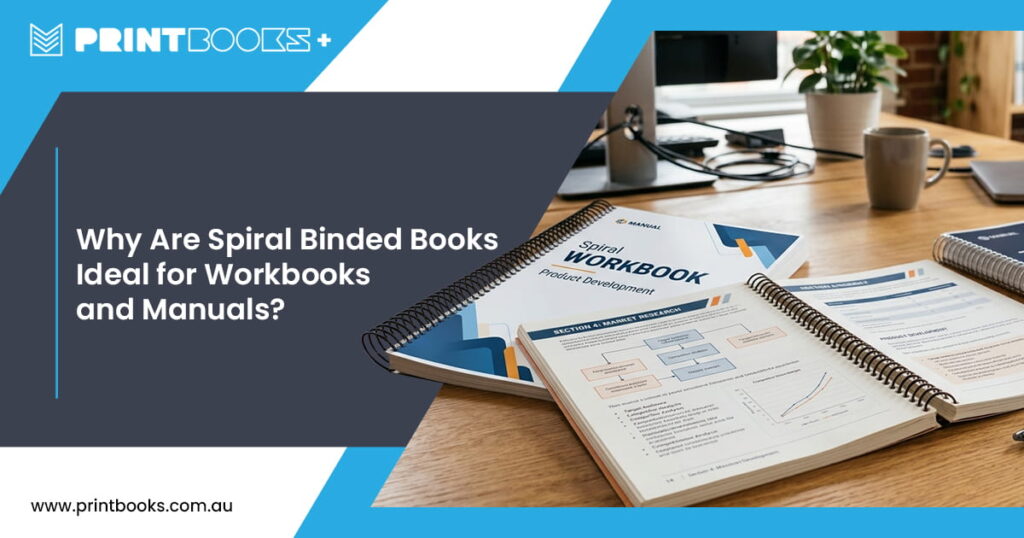
When it comes to creating practical, friendly documents, the format always matters just as much as the content. Whether you are designing any type of training materials, instructional guides or educational workbooks, the way your pages are bound can significantly impact usability.
Many professionals and even educators prefer spiral binded books because they offer unmatched convenience and durability.
This is one of the most common pain points for users dealing with traditional binding formats. That is where spiral binding stands out as a practical solution.
It ensures that documents remain open and easy to use, especially in hands-on environments. Similarly, spiral book binding has become a go-to choice for organizations that prioritize their functionality and, most importantly, their user experience.
What Makes Spiral Binding Unique?
Spiral book binding involves punching a series of consistent holes along the edge of a stack of paper and threading a continuous plastic or metal coil through them. And this creates a hinge that is significantly more versatile than a hard spine.
While “perfect binding” (the kind used for paperbacks) looks sleek on a bookshelf, it is designed for passive reading. Workbooks and manuals, however, are more active documents. They require the user to write, flip, reference and transition between sections rapidly.
The 360-Degree Advantage
One of the most immediate benefits of spiral binded books is the ability to fold the covers back-to-back.
Flat-Lay Functionality
Traditional books have a “memory” in the spine; they want to spring shut. In a workshop setting, this requires the user to weigh down the edges with a phone or a coffee mug just to keep the page visible.
Spiral binding allows the book to lay perfectly flat on a desk. And this is critical for manuals where the user needs their hands free to operate a keyboard, a piece of machinery or medical equipment.
Compact Footprint
Because you can fold the book 360 degrees, it occupies exactly half the desk space of a standard book. In crowded classrooms or cramped laboratory benches, this “half-footprint” capability is excellent. It allows the user to focus on a single page without the distraction or bulk of the opposite leaf.
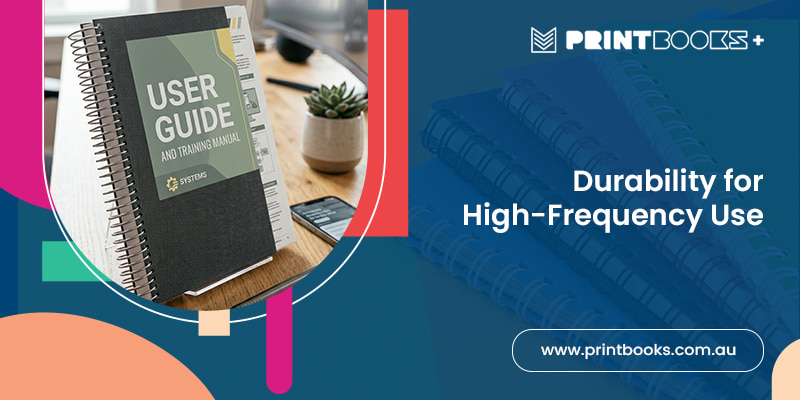
Durability for High-Frequency Use
Manuals and workbooks are not meant to sit on a shelf, they are meant to be hauled in backpacks, shoved into toolboxes and flipped through hundreds of times.
Stress Distribution
In a glued spine, every time you open the book, you put stress on the adhesive. Over time, that glue becomes brittle and snaps. With spiral book binding, the stress is distributed across dozens of individual loops. Even with aggressive use, the pages move freely without putting tension on the binding itself.
Material Resilience
Modern coils are typically made of high-quality PVC or coated metal. These materials are crush-resistant. This means if the book is squeezed in a bag, the coil will bounce back to its original shape rather than denting or snapping.
Ideal Use Cases and Examples
To understand why spiral binded books are the industry standard for specific sectors, let us look at a few practical applications:
Corporate Training Workbooks
During a three-day seminar, participants are constantly taking notes. A spiral-bound format allows them to treat the workbook like a legal pad. They can write comfortably on both the left and right-hand pages without the “hump” of the spine interfering with their handwriting.
Technical Repair Manuals
Imagine an HVAC technician on a ladder or a mechanic under a car. They need to reference a wiring diagram. A spiral binding allows them to flip to the exact page, fold the book over and perhaps even hang it from a hook nearby. The pages stay put, even in a breeze or a high-vibration environment.
Educational Activity Books
For students, especially those in tactile learning environments, the ability to tear out “perforated” pages from a spiral coil (or simply flip them out of the way) makes the learning process less about managing the book and more about engaging with the task.
Customization and Professional Aesthetics
There is a common misconception that spiral binded books look “cheap” compared to hardcovers. In reality, the customization options allow for a highly professional, branded appearance.
Coil Colors:
These coils come in a spectrum of colors from professional black and navy to vibrant brand-specific oranges or greens.
Tabbed Dividers:
Because the binding is “loose,” it is incredibly easy to insert heavy-duty tabbed dividers. This allows users to jump to specific chapters of a manual instantly, which is really important for safety guides or quick-reference handbooks.
Cover Versatility:
You can easily pair spiral binding with any clear plastic front covers to protect against spills and heavy-duty cardstock back covers for extra rigidity.
Cost-Effectiveness for Small and Large Batches
From a production standpoint, spiral book binding is highly efficient. For businesses that need to update their manuals frequently, such as software companies with rolling updates, spiral binding allows for smaller print runs without the massive setup costs associated with offset printing and traditional binding.
If a manual needs a significant update, the coils can often be removed, new pages inserted, and the book re-bound, though it is usually more cost-effective to simply print a fresh batch.
This flexibility ensures that your team is never working from outdated information simply because “it was too expensive to print new books.”
Accommodating Various Page Counts
Whether your manual is a slim 20 pages or a massive 400-page technical guide, there is a coil size to fit. Spiral binding can accommodate varying thicknesses far more gracefully than stapling (which has a low page limit) or perfect binding (which requires a minimum thickness to be effective).
The coil diameter is simply adjusted to match the stack height. This ensures that the “flip” remains smooth regardless of how much information is packed inside.
Conclusion
When choosing the format for your next project, the goal should always be to reduce the “friction” between the user and the information. Spiral bound books solve the physical frustrations that often accompany intensive learning and technical work.
By prioritizing spiral binding, you are choosing a format that respects the user’s environment, their need for efficiency, and the longevity of the document. Whether it’s the space-saving 360-degree fold or the sheer durability of the spiral book binding process. This method ensures that your workbooks and manuals remain a helpful tool rather than a cumbersome obstacle. The PrintBook’s right-binding sessions keep the user’s attention where it belongs: on the content.