
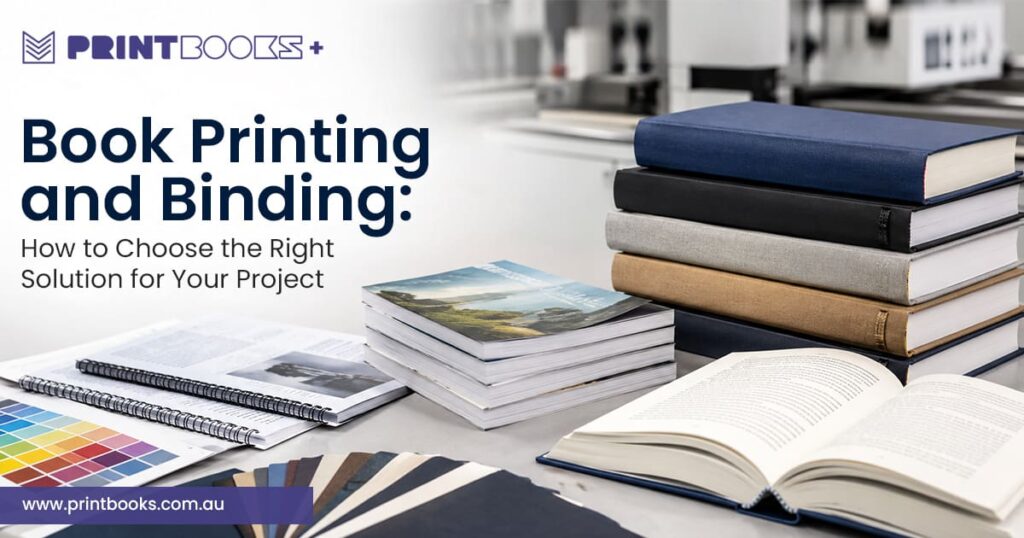
Most people spend weeks — sometimes months — crafting the content for a publication. The writing gets reviewed, the layout gets refined, the images get selected. Then, at the very end, someone asks: “So how are we printing this?” And that’s where things can go sideways.
Printing and binding decisions aren’t just logistical boxes to tick. They shape how your publication feels in someone’s hands, how long it lasts, and whether people actually use it. A training manual that won’t lie flat is annoying to work from. A corporate report printed on flimsy paper feels cheap regardless of what’s written inside. A catalogue with a cover that scuffs after one week on a shelf doesn’t do your brand any favours.
These decisions matter. And the earlier you think about them, the better your final product will be.
How Printing Methods Influence the Quality of Your Book
Not all printing is the same, and the method you choose will affect everything from colour accuracy to cost to how quickly you can get the job done.
The two main options most businesses and publishers work with are digital printing and offset printing — and understanding the difference between them is genuinely useful when you’re planning a project.
Digital printing is fast, flexible, and cost-effective for smaller quantities. If you need 50 training manuals for a new staff cohort, or 200 copies of a company profile for a trade event, digital printing is probably the right call. You don’t pay large setup fees, turnaround times are quick, and you can make changes between print runs without significant cost penalties. For businesses that regularly update their materials — revised procedures, updated pricing, new branding — this flexibility alone makes digital printing worth it.
Offset printing is a different beast. It’s the method of choice when you need large volumes and exceptional print quality. The setup process takes longer and costs more upfront, but once it’s running, the cost per unit drops significantly and the results are outstanding. Colour accuracy is tighter, image reproduction is sharper, and the consistency across thousands of copies is hard to replicate with digital. If you’re producing a high-end coffee table book, a premium product catalogue, or a large-volume magazine run, offset is where you want to be.
The honest answer to “which should I use?” is: it depends on how many you need and what you need them to look like. Get clear on both of those things first, and the decision usually makes itself.
Matching Book Binding Styles to the Purpose of Your Publication
Binding is one of those choices that people tend to think about last, when really it should be one of the first things considered. The way a book is bound affects how it’s used, how long it lasts, and what kind of impression it makes.
Perfect binding is what you see on most paperback books and professional publications — clean square spine, polished finish, sits nicely on a shelf. It works well for annual reports, catalogues, company profiles, and any publication where appearance matters as much as content. It’s not ideal for books that need to lie completely flat when open.
Saddle stitch binding — where folded pages are stapled through the spine — is the practical choice for shorter publications. Event guides, promotional booklets, small catalogues. It’s lightweight, cost-effective, and easy to distribute. The limitation is page count; once you get past a certain thickness, it’s no longer a realistic option.
Wire and spiral binding solve the flat-opening problem entirely. These are the bindings you want for training manuals, workbooks, instruction guides, and reference materials — anything someone will use with both hands while the book sits open on a desk. They’re not the most glamorous options, but for functional publications, they’re often the most practical.
Hardcover binding is at the top end. It’s what you choose when the publication itself needs to make a statement — coffee table books, collector’s editions, premium corporate publications, photography collections. A hardcover book has a physical presence that other formats simply don’t. It feels substantial. It lasts. And it signals that whatever’s inside was worth the investment.
The key question to ask yourself is: how will people actually use this? Will it sit on a shelf and be consulted occasionally? Will it be open on a desk while someone works through it? Will it be handed out at events and potentially left behind? The answers point you toward the right binding choice faster than any list of options will.
The Importance of Paper Selection in Book Printing
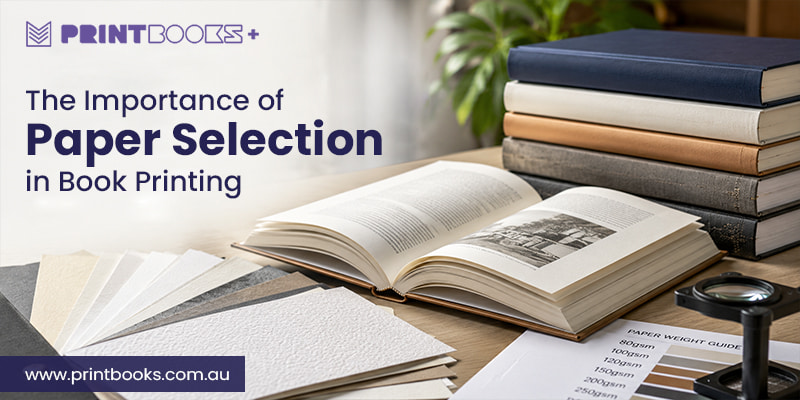
Paper is another area where the details really do matter, and where cutting corners tends to show up in ways you didn’t anticipate.
For text-heavy publications — think reports, manuals, workbooks — uncoated paper is usually the better choice. It reduces glare under artificial lighting, which makes extended reading more comfortable. It also tends to feel more natural and approachable, which suits content-driven publications well.
For publications that lead with visuals — product catalogues, photography books, lookbooks — coated paper is the standard. It gives colours somewhere to sit without being absorbed into the paper fibres, which means images come out sharper and more vibrant. The difference between a product shot printed on uncoated stock versus a quality coated stock is immediately visible.
Paper weight matters too. A heavier stock feels more premium in the hand and suggests quality before a reader has even looked at the content. Lighter stocks work fine for high-volume or frequently distributed materials, but for anything you want to feel considered and substantial, it’s worth going heavier.
If environmental responsibility is important to your organisation — and for many businesses now, it genuinely is — recycled papers and FSC-certified stocks are widely available and perform well. Using them doesn’t mean compromising on the final result; it means being thoughtful about how that result was produced.
Why Cover Finishes Matter More Than Most People Realise
The cover is the first thing someone touches. Before they read a single word, they’ve already formed an impression based on how the cover looks and feels. That’s not a small thing.
Lamination is the baseline. Matte lamination gives a cover a refined, understated quality — it photographs well, it doesn’t show fingerprints easily, and it’s associated with premium publications. Gloss lamination is more vibrant and eye-catching, which works well when you want colours to really pop or when the publication will be displayed in a retail or exhibition environment.
Soft-touch lamination has become increasingly popular over the last several years, and once you’ve held a book with it, you understand why. The surface has a velvety, almost suede-like feel that’s genuinely distinctive. It makes people want to pick the book up and hold it — which is exactly what you want from a cover.
Beyond lamination, there are a range of enhancement techniques worth knowing about. Spot UV applies a gloss coating to specific areas of the cover — a logo, a title, a graphic element — creating a contrast between coated and uncoated surfaces that looks sharp and considered. Embossing and debossing press design elements into the cover material to create a raised or recessed effect. Foil stamping adds metallic or coloured foil to specific areas for a finish that’s immediately eye-catching.
These techniques aren’t just decorative. They communicate something about the publication before it’s opened. Used well, they signal quality, care, and professionalism in a way that plain printing simply can’t.
How Businesses, Authors, and Organisations Benefit from Professional Book Printing
It’s worth stepping back and noting just how broad the use cases for professional book printing actually are.
Businesses use printed publications constantly — training manuals for new staff, employee handbooks, annual reports for stakeholders, product catalogues for sales teams, company profiles for new clients. These aren’t vanity projects. They’re working documents that represent the organisation and communicate its values. When they’re professionally produced, they do that job well. When they’re not, it shows.
For authors and independent publishers, the quality of print production has a direct impact on how a book is received. Readers form judgements quickly, and a poorly bound or badly printed book creates doubt before a single page is read. A well-produced book, on the other hand, gives readers confidence in what they’re about to engage with.
Educational institutions, non-profits, and government bodies all rely on professionally printed materials too — course workbooks, community guides, policy documents, fundraising publications. These materials often need to hold up to regular handling over months or years, which makes binding and paper choices particularly important.
Avoiding Common Mistakes When Choosing Book Printing and Binding
The most common mistake is leaving these decisions too late. By the time a publication is fully designed and content-approved, the options can feel rushed. Binding styles that would have worked beautifully might no longer be feasible given the page count. Paper choices that suit the design might not be in stock. Cover finishes that would have elevated the whole thing get skipped because there’s no time to source them.
The second most common mistake is making decisions based purely on cost. Price is always a consideration, but choosing the cheapest paper regardless of whether it suits the content, or picking a binding style because it’s cheaper rather than because it fits the use case, often leads to a result that doesn’t serve the publication well.
Think about the full picture early. What is this publication for? Who will use it, and how? How long does it need to last? What impression should it make? Answer those questions first, then work backwards to the printing and binding decisions that support those answers.
Book Printing and Binding Solutions Designed for Every Project
There’s no universal answer when it comes to printing and binding. A short-run training manual and a premium hardcover coffee table book have entirely different requirements, and the approach that works brilliantly for one would be completely wrong for the other.
What stays consistent across every project is this: the more thought you put into printing and binding decisions early in the process, the better the final result will be. These choices aren’t afterthoughts — they’re a core part of what makes a publication work.
Whether you’re producing something functional, something premium, or something in between, getting the print and bind right means your publication does its job properly. It looks credible, it lasts, and it reflects the effort that went into everything inside it.
That’s what professional book printing and binding is really about.