
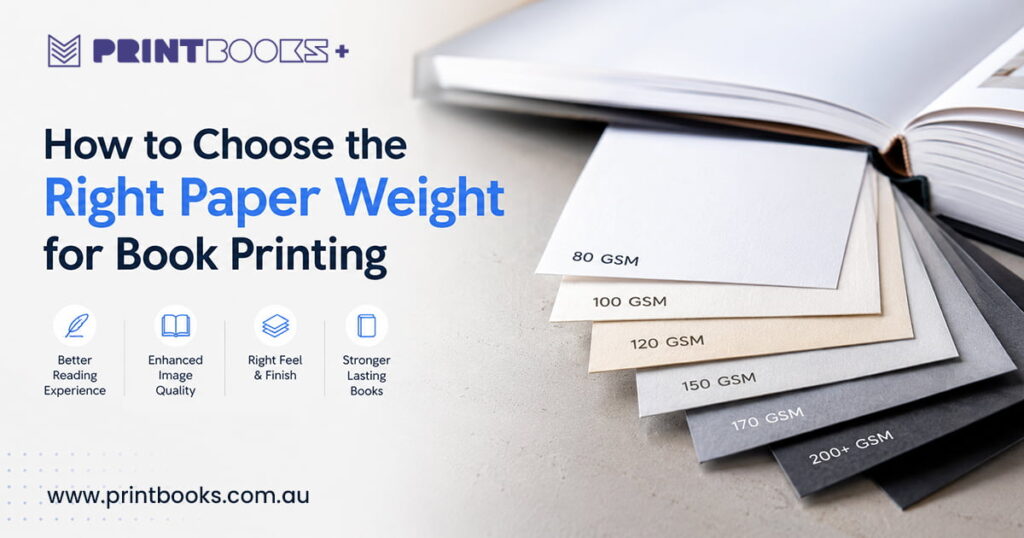
When planning a book, paper selection can be just as important as the cover design, binding and page layout. The right paper weight affects how a book feels in the hands, how easy it is to read, how images appear and how substantial the finished publication looks.
For anyone considering book printing in Australia, one of the most common questions is: What GSM paper should I choose for my book?
GSM, or grams per square metre, is a standard measurement used to describe paper weight. Printbooks uses several paper weight ranges for different book formats and content types, from lightweight stocks for novels to heavier stocks for image-rich publications. The best choice ultimately depends on your book’s purpose, page content, design and desired finish.
What Does GSM Mean in Paper?
GSM stands for grams per square metre. It indicates the weight of a sheet of paper measuring one square metre.
Generally, lower GSM paper is lighter and more flexible, while higher GSM paper feels heavier and more substantial. However, GSM does not tell you everything about a paper. Thickness, opacity, texture, coating and paper composition can also influence the final feel and appearance.
For custom book printing, it is therefore important to consider both paper weight and paper type. Printbooks offers coated, uncoated and recycled paper stocks, providing different options for different book styles and printing requirements.
Why Does Paper Weight Matter for Book Printing?
Paper weight affects much more than how a page feels.
The right GSM can influence:
Reading comfort:
Lightweight paper can make long books easier to hold.
Book thickness:
Heavier paper can increase the overall bulk of a publication.
Image reproduction:
Image-heavy books may benefit from heavier stocks.
Durability:
A heavier stock can provide a more substantial feel.
Printing costs:
Paper choice contributes to the overall production cost.
Binding:
The number and weight of pages can affect the finished book and its binding requirements.
This means there is no single “best paper weight” for every book. A novel, coffee table book, workbook and photo publication can all require different paper specifications.
Custom Book Printing: Which GSM Should You Choose?
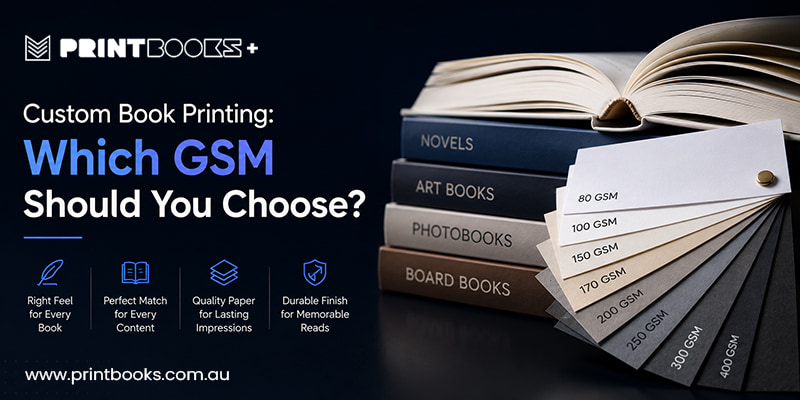
With custom book printing, the right paper weight depends on the type of book you are producing, the content inside it and the experience you want to create for readers. Printbooks offers different paper weight options suited to specific book formats, from lightweight novels and activity books to heavier art books and board books.
| Book Type | Recommended Paper Weight |
|---|---|
| Activity Books | 100 GSM |
| Art Book Printing | 150–170 GSM |
| Autobiography Books | 100–150 GSM |
| Calendar Books | 170–200 GSM coated paper |
| Board Book Printing | 250–400 GSM |
| Novels | 80 GSM |
| Magazines | 113–150 GSM |
| Workbooks | 100 GSM |
| Photobooks | 150–170 GSM |
If you’re an indie author on a budget, a generic cover might seem like the safest option. But in the long run, it can cost you more in lost sales and missed opportunities.
The truth is, books with well-designed covers tend to be perceived as more professional and credible. And when a reader is choosing between two books, they will almost always gravitate toward the one that looks more polished and engaging.
Coated vs Uncoated Paper: Does It Matter?
Yes. GSM is only one part of paper selection.
Printbooks provides coated, uncoated and recycled stocks, each offering different characteristics.
Coated paper can provide a smoother surface and is commonly considered for publications where colour and images are important.
Uncoated paper offers a more natural writing and reading experience and can be appropriate for text-heavy books and publications where a non-reflective surface is preferred.
Recycled paper can be considered when sustainability is an important part of the project’s requirements. Printbooks also provides recycled stock options for book printing.
The right combination of GSM and paper type can have a bigger impact than choosing GSM alone.
How Does Paper Weight Affect Book Printing Cost?
Paper is one of the material decisions that can influence the cost of a printed book. Heavier stocks generally use more material and can also increase the weight of the finished publication.
When planning your budget, consider:
- Book size
- Number of pages
- Paper weight and stock
- Colour or black-and-white printing
- Binding method
- Print quantity
- Finishing requirements
- Shipping and handling
Choosing the right paper isn’t necessarily about selecting the heaviest or most expensive option. It is about selecting the stock that delivers the right result for your publication
Does Higher GSM Always Mean Better Quality?
No.
A higher GSM does not automatically mean better paper for every book.
For example, a 75–90 GSM stock can be an excellent choice for a novel because it keeps the book lightweight and comfortable to read. On the other hand, a photo-heavy publication may benefit from 150+ GSM because the content is more visually focused.
The best paper weight is the one that supports the book’s purpose.
Should You Request Paper Samples Before Printing?
Absolutely. Seeing paper specifications on a screen cannot fully communicate how a stock feels in your hands.
Printbooks provides the option to request a free sample pack, allowing you to physically compare available stocks before finalising your project.
This can be especially useful when deciding between coated, uncoated and recycled stocks or when the tactile experience of the finished book is particularly important.
Frequently Asked Questions About Paper Weight
What is the best GSM for book printing?
There is no universal best GSM. Printbooks recommends approximately 75–90 GSM for standard novels, 100–120 GSM for non-fiction with illustrations or diagrams, and 150+ GSM for photo-heavy books.
Is 80 GSM good for books?
Yes. 80 GSM falls within the 75–90 GSM range that Printbooks identifies as standard for many novels, making it a practical option for text-heavy books.
Is 150 GSM suitable for books?
Yes, particularly for image-heavy or photo-focused publications. Printbooks identifies 150+ GSM as suitable for photo-heavy custom book printing.
How do I choose paper for my book?
Start with your book’s content and purpose. Consider whether it is text-heavy, illustrated or image-focused, then compare GSM, paper type, finish, binding and budget. Requesting physical paper samples can also help you make a confident decision.
Choose Paper That Fits Your Book
Choosing paper weight is an important part of creating a professional printed book. Rather than automatically choosing the heaviest stock, consider how your readers will use the book and what you want the finished publication to look and feel like.
For book printing services in Australia, Printbooks offers a range of coated, uncoated and recycled stocks alongside different book formats and binding options.
Whether you’re printing a novel, non-fiction title, workbook, photo book or premium publication, choosing the appropriate GSM can help create the right balance between print quality, readability, durability, appearance and cost.
If you’re unsure which paper weight is right for your project, request a sample pack and compare the available stocks before moving ahead with your book printing.